One of my favourite "museums" in London puzzles you since the very beginning.
Starting the 5-floor-exhibition with its owner's hologram, it will continuously make you ask yourself if you believe it or not.
Ripley's Believe It or Not! London opened at The Trocadero, Piccadilly Circus in August 2008. It's part of a global chain of odditoriums, as these museums are called, which has over 700 authentic, original, and unbelievable exhibits collected from all over the world, representing the places and cultures visited by Robert Ripley during his travels.
Exhibits Include...
4 meter model of Tower Bridge made out of 400,000 matchsticks
Swarovski-Covered Crystal Mini Cooper worth £500,000
copy of The Last Supper painted on a grain of rice
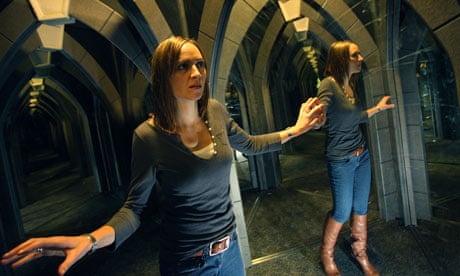
Mirror Maze
The maze consists of hundreds of mirrored reflections. The more participants in the maze, the more confusing it is.
The Tower Of London has marked the 100th anniversary of the outbreak of the First World War with a striking art installation.
Blood Swept Lands and Seas of Red by Paul Cummins features thousands of ceramic poppies pouring out of the tower flowing into the moat and will officially be unveiled on August 5.
The final poppy will be planted on November 11.
There will be a total of 888,246 poppies planted, with each flower representing a British military fatality from WW1
Cash can no longer be used on any of London's buses in a move that Transport for London (TfL) says will save £24m a year.
Passengers will need a prepaid or concessionary ticket, Oyster card or a contactless payment card to travel.
TfL said only 0.7% of all bus journeys were paid for with cash and that tourists were unlikely to be affected. But the Green Party said more ticket outlets were needed and questioned how vulnerable passengers would cope.
TfL said its research showed the move, which came into force at 04:30 BST, was unlikely to affect tourists "as the vast majority use a prepaid ticket, such as a Visitor Oyster, to get around the capital".
'Highly inadequate'
Its drivers have been asked to guide vulnerable people.
Last month TfL introduced the "one more journey" feature for Oyster users, allowing passengers to make one further trip if they have insufficient credit on their card, which TfL said had benefitted around 44,000 customers a day.
Mike Weston, TfL's director of buses, said: "Removing cash from our bus network not only offers customers a quicker and more efficient bus service but it enables us to make savings of £24m a year which will be re-invested to further improve London's transport network."
But Green Party London Assembly member Darren Johnson said questions remained over whether passengers who lost or damaged their Oyster cards would be allowed to travel at all, saying that more than 2,100 Oyster cards were lost, stolen or stopped working on the average day last year.
Mr Johnson said: "I am very concerned that TfL are only planning 19 new Oyster ticket stops in preparation for the cashless switchover.
This seems highly inadequate, especially when every ticket office across the tube network is going to be closed. "I also have serious concerns about the impact which this sweeping change could have on vulnerable passengers."
What is the history of the three lions on the English football shirt?
The lions have a history going back to the 12th century, when a standard with three gold lions on a red field was carried into battle to inspire the troops. The first one came from Henry I - known as the lion of England - who had a lion on his standard on taking power in 1100. Shortly afterwards he married Adeliza, whose father also had a lion on his shield, and to commemorate the event he added a second lion to his standard. In 1154, two lions became three when Henry II married Eleanor of Aquitaine, who - yes, you've guessed it - also had a lion her family crest. Later that century, Richard the Lionheart (1189-1199) used the three golden lions on a scarlet background as a symbol of the English throne and, after that, it appeared on the Royal Arms of every succeeding monarch. So when the FA was formed in 1863, it seemed natural enough to base their logo on this stirring royal shield. Since then, the design has only been changed once, in 1949 - when the crown that was on top of the lions was removed to differentiate the badge from that of the English cricket team.
You use words like “whilst”, “shall”, “peckish” and “knackered” and don’t drop the u’s when spelling words like colour, favourite and humour.
You have no trouble understanding the dialect in British movies such as Billy Elliott, The Full Monty and Trainspotting.
You subscribe to more British magazines than you do American ones.
You know how to make a proper cup of tea and enjoy a nice biscuit.
You can explain to people why the British drive on the “other” side of the road.
You know how to display the Union Flag right side up.
You watch so much British telly that on most days the only non-British accents you hear belong to your family members.
You know the UK Top 10 charts by heart, but have no clue what’s playing on local radio.
You have a closet full of Union flag clothing but struggle to find anything patriotic to wear on the 4th of July.
You follow the weather in the UK and can convert Celsius to Fahrenheit in your head.
You can’t remember the American words for courgette, aubergine or rocket.
You know when it’s St. George’s Day, St. Andrew’s Day and St. David’s Day.
You know more about what’s going on in the U.K. than you do your own country.
Your Facebook page is set on British English instead of American English.
Your computer clock is set to UK time and you celebrate the New Year at midnight, GMT.
Your Facebook and Twitter feeds are full of posts by sites like Smitten by Britain!
You have Siri or your GPS set to a voice with a British accent.
You spend your free time writing a blog about Great Britain!
Timeline
It’s hard to believe, but when The EDF Energy London Eye was launched as The Millennium Wheel, it was only going to be standing for a few years. But today, the London Eye has become a symbol of modern Britain; it is the UK’s number one paid-for visitor attraction and film set for TV shows and movies.
Along the way, there have been plenty of milestone moments, have a look on our timeline below.
January 2011
The London Eye enters a new partnership with EDF Energy and becomes the EDF Energy London Eye.
November 2010
The London Eye lauches the first ever open air ice rink on the south bank, in the shadow of the London Eye.
December 2009
We continue to make history with the 36 million flights on the London Eye..
August 2009
The London Eye launches a spectacular new 4D Experience.
The London Eye goes through a re-branding.
May 2009
the London Eye launches its capsule upgrade programme with removal of the first capsule
London.
June 2008
We made history with the 30 million flights on the London Eye..
May 2008
The London Eye River cruise celebrated its millionth guest.
March 2007
The 25 millionth visitor was welcomed to the London Eye
March 2007
The London Eye became part of the Merlin Entertainment’s Group, the world’s number two visitor attraction operator.
February 2006
The London Eye was finally granted a 25 year lease agreement.
December 2005
The first civil partnership was performed on the London Eye. To mark the occasion, the London Eye was turned pink.
March 2005
The London Eye had its fifth birthday - 7,000 quarter bottles of Laurent-Perrier Champagne and 3,000 bottles of orange juice were given away so customers could join in the party .
February 2004
The London Eye kept turning until midnight for the first time to give lovers a romantic moment on St. Valentine’s Day.
September 2002
Our 10 millionth flight took place.
August 2002
The London Eye River Cruise was launched, quickly becoming a favourite way to see London from the River Thames.
February 2002
A new idea for Valentines Day and lovers - wedding packages allowing people to get married on the London Eye were introduced .
January 2002
The Euro was accepted at the London Eye
March 2001
The London Eye celebrated its first official birthday. During the first year alone, more than 3.5 million people came on board to fly above London.
March 2000
The London Eye officially opened to the public
October 1999
The London Eye was raised over the River Thames
Late 1998
Construction started on The London Eye, a huge international effort involving hundreds of people.
There are many parks and open spaces in London, England. Green space in central London consists of five Royal Parks, supplemented by a number of small garden squares scattered throughout the city centre. Open space in the rest of the city is dominated by the remaining three Royal Parks and many other parks and open spaces of a range of sizes, run mainly by the local London boroughs, although other owners include the National Trust and the City of London Corporation.
Royal parks
The centrepieces of London's park system are the eight Royal Parks of London. Covering 1976 hectares, they are former royal hunting grounds which are now open to the public. Four of these — Green Park (16 ha), St. James's Park (34 ha), Hyde Park (140 ha), and Kensington Gardens (111 ha) — form a green strand through the western side of the city centre, whilst a fifth, Regent's Park (197 ha) is just to the north. The remaining three Royal Parks are in the suburbs — Greenwich Park (73 ha) to the south east, and Bushy Park (450 ha) and Richmond Park (955 ha) to the south west.
Garden squares
Many of the smaller green spaces in central London are garden squares, which were built for the private use of the residents of the fashionable districts, but in some cases are now open to the public. Notable examples open to the public are Russell Square in Bloomsbury, Lincoln's Inn Fields in Holborn and Soho Square in Soho.
The Royal Borough of Kensington and Chelsea contains over a hundred garden squares whose use is restricted to residents. The upkeep of these squares is paid for through a levy on top of residents' council tax.
Council parks
The bathing pond at Victoria Park. Unused for bathing since the 1930s.
In addition to these spaces, a large number of council-owned parks were developed between the mid 19th century and the Second World War, including Victoria Park (86.18 ha), Alexandra Park (80 ha) and Battersea Park (83 ha).